[Jeu] Le sphinx à deux fêtes

Inspis, théories, conseils ...
Avatar de l’utilisateur
Sans Visage
Banni
Messages : 1247
Inscription : mer. août 19, 2009 4:37 pm
Localisation : Manchester (UK)

Re: [Jeu] Le sphinx à deux fêtes

Message par Sans Visage »

Triangle Agency?
Artesia: le retour au pays
Un pays sans loi, des brigands les mains ensanglantées, des livres qu'il vaut mieux ne pas lire, des cultes secrets et un chevalier de retour chez lui.

[MJ only] Coriolis mes aides de jeu
Avatar de l’utilisateur
Gridal
Dieu d'après le panthéon
Messages : 6995
Inscription : jeu. août 17, 2006 8:13 pm

Re: [Jeu] Le sphinx à deux fêtes

Message par Gridal »

Non ce n'est pas Triangle Agency.

indice n°2
-1st level. If you want a story arc about regular slobs who get in over their heads, especially as a change of pace, try 1st level.

-2nd level. Here the characters are experts in their fields and generally competent. This power level is good for a gritty, street-level story arc. For a long arc, the characters might start here and advance to 3rd level over time.

-3rd level. At this power level, the characters are expert enough to get into real trouble and competent enough to navigate it. The characters are noteworthy experts in their fields. This power level is a great default because the characters are powerful enough to make things happen but still easy to relate to.

-4th level. Here the characters are world-class in their areas of expertise and expert in general, capable of amazing achievements and catastrophic failures.

Indice précédent
Spoiler:
Anti-Reality Grenade
This powerful weapon explodes, throwing not shrapnel but fragments of other worlds, which slice through ours. The result is a zone of upheaval, madness, and impossible physics. Everything is changed, perhaps slightly and perhaps fundamentally. The transformation could be as simple as changing someone’s clothes to those of a medieval peasant from an alternate timestream. It can be as permanent as changing someone into a life-size marionette of themselves as a cat person. Ambiguous artifacts from other worlds, cold to the touch, are left behind in the grenade’s wake.
Avatar de l’utilisateur
Olivier Fanton
Dieu des lapins qui bouquinent
Messages : 4095
Inscription : jeu. août 07, 2003 10:01 pm
Localisation : Rouen (ou pas loin)
Contact :

Re: [Jeu] Le sphinx à deux fêtes

Message par Olivier Fanton »

Une échelle de niveaux très resserrée!
Un lapin qui bouquine n'a pas besoin de lunettes. (Les Bouquins du Lapin)
Avatar de l’utilisateur
Gridal
Dieu d'après le panthéon
Messages : 6995
Inscription : jeu. août 17, 2006 8:13 pm

Re: [Jeu] Le sphinx à deux fêtes

Message par Gridal »

@Olivier Fanton L'échelle complète va jusqu'au niveau 7 mais les trois derniers niveaux sont "hors-norme" par rapport au cadre de jeu habituel exploré par les PJ.

Là j'ai pas le bouquin à portée de main mais je propose un autre indice dans la journée.
Avatar de l’utilisateur
Gridal
Dieu d'après le panthéon
Messages : 6995
Inscription : jeu. août 17, 2006 8:13 pm

Re: [Jeu] Le sphinx à deux fêtes

Message par Gridal »

Indice n°3
MUTANTS

Dead are all the gods: now we yearn for the metahuman to live.
—Friedrich Nietzsche, Thus Spoke Zarathustra, 1883

[nom de lieu] is home to an active community of mutants, mostly victims of one teratogenic toxin or another. Some are just flukes in the algorithmically created variety of human expressions. Mutants come from far and wide to find a place where they can fit in, more or less. [nom de lieu] also produces more than its fair share of homegrown mutants. The mutant community encompasses two trends that are not in line with each other: supporting each other as they deal with the burden of their mutations and promoting the idea that mutations are a gift and not a burden. More and more these days, mutants refer to themselves as Phenotype Nonconformists, or PNCs, and they regard the term “mutant” as derogatory and dehumanizing.

Love, Sex, and Reproduction

Romance is fraught with social implications. For a mutant to date or marry a PT (“phenotypical”) can be like a badge of acceptance in the greater society or a mark of distinction to fellow mutants, who are slow to admit any envy they feel. The phenotypical partner sometimes comes to express personal oddities, liberated by mutant culture to shed the constraints of phenonormativity. The partner might dress, groom, or behave in such ways as to emphasize how they differ from the norm. Children of these unions come under close scrutiny to identify ways in which they transcend conformity to phenotypical norms. It’s expected that the mutant parent will want a mutant child. If the mutant parent is a POM (“phenotype-only mutant”), their children will probably not be born mutants. Some such parents, however, harbor the secret hope that their children will be PNCs like their partners. Romance between mutants can also be tricky. Their mutations usually differ, one to the other, so their similarity is more social than personal. Their children may or may not inherit their mutations, and the children might or might not want to grow up to be part of the PNC community. PNCs have no end of suggestions for how to ensure that one’s child is born a mutant or, failing that, will develop into one. They use, or at least recommend, spells, industrial solvents, astrology, and sperm exposed to LSD.

Indices précédents
Spoiler:
Anti-Reality Grenade
This powerful weapon explodes, throwing not shrapnel but fragments of other worlds, which slice through ours. The result is a zone of upheaval, madness, and impossible physics. Everything is changed, perhaps slightly and perhaps fundamentally. The transformation could be as simple as changing someone’s clothes to those of a medieval peasant from an alternate timestream. It can be as permanent as changing someone into a life-size marionette of themselves as a cat person. Ambiguous artifacts from other worlds, cold to the touch, are left behind in the grenade’s wake.
-1st level. If you want a story arc about regular slobs who get in over their heads, especially as a change of pace, try 1st level.

-2nd level. Here the characters are experts in their fields and generally competent. This power level is good for a gritty, street-level story arc. For a long arc, the characters might start here and advance to 3rd level over time.

-3rd level. At this power level, the characters are expert enough to get into real trouble and competent enough to navigate it. The characters are noteworthy experts in their fields. This power level is a great default because the characters are powerful enough to make things happen but still easy to relate to.

-4th level. Here the characters are world-class in their areas of expertise and expert in general, capable of amazing achievements and catastrophic failures.
Avatar de l’utilisateur
pseudo
Dieu d'après le panthéon
Messages : 3137
Inscription : jeu. sept. 01, 2011 9:42 pm
Localisation : Geneve

Re: [Jeu] Le sphinx à deux fêtes

Message par pseudo »

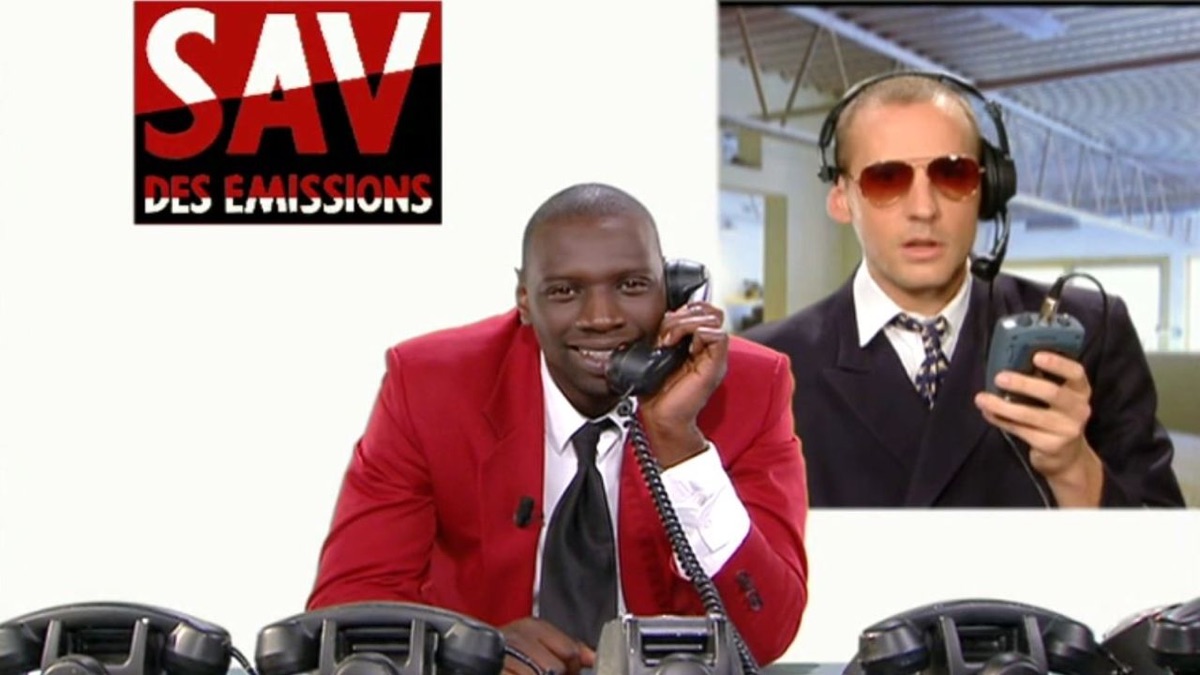
« PNC aux portes, armement des toboggans, vérification de la porte opposée »
Image

Ce serait pas Mutant Future ?
Apparently you can take the boy out of the dungeon, but you can't take the dungeon out of the boy
(knights of the dinner table #73)
Avatar de l’utilisateur
Gridal
Dieu d'après le panthéon
Messages : 6995
Inscription : jeu. août 17, 2006 8:13 pm

Re: [Jeu] Le sphinx à deux fêtes

Message par Gridal »

Ce n'est ni Mutant Future, ni SAV des émissions RPG :lol:

Indice n°4
Creating a Character

MISERY’S THE RIVER OF THE WORLD. EVERYBODY ROW! EVERYBODY ROW!
—“MISERY’S THE RIVER OF THE WORLD,” TOM WAITS, 2002

YOUR CHARACTER CONCEPTS

When conceiving your character, work along these rules. Like all rules, they are for your benefit.

They Are Human
Your character can for sure be some sort of messed-up human, but they’ve got to be basically one of us. They can be mutants, astral hosts, post-humans, subjects of metahuman experiments, prodigies, freaks, exceptions, victims, shadows of humanity, and outliers. They often are. But being fundamentally human helps everyone at the table understand your character, and dramatically speaking, it helps everyone at the table relate to your character. Our common humanity is our greatest strength.

They Follow “Hollywood” Reality
Hollywood knows what people want or it would be a historical footnote. You know the simplified, counterfactual way that Hollywood scriptwriters treat various topics to make them work better in storytelling: history, biography, psychology, consciousness, evolution, mutations, DNA, epigenetics, the conservation of energy, scientific research, etc. Hollywood lies about how the world really works for all the right reasons,
and you should, too.

They Are Painted with Broad Strokes
[nom de lieu] is an extreme place with outrageous characters and uncanny locations. A character detailed with a fine brush might wind up being hard to appreciate in this outlandish setting. Your character needs to be able to hold their own in this environment and not get upstaged by the GMCs that populate it. Hyperbole is welcome, as is a touch of satire and farce.

They Can Take It
Characters in [nom du jeu] are liable to get shoved, punched, trammeled, clubbed, stabbed, burned, interrogated, incarcerated, ankle-locked, tailed, spied on, lied to, set up, betrayed, drugged, cursed, telepathed, brain-burned, mind-controlled, envenomed, asphyxiated, and intimidated. They might not all look like it, but they all have the tenacity typical of protagonists in violent stories.

They Fit In, or Do They?
Characters are more fun if they can go to parties and less fun if they have limited options for interacting with GMCs person-to-person. If you want to try a character that is an outsider and not someone that could ever hobnob or glad-hand, that’s probably OK for a short arc. Even characters that are popular at parties often hide ways in which they deeply don’t fit in.

They Are Not Played Straight
“An Exorcist” is not a fully functional [nom du jeu] concept. “An Exorcist Who Loves Fighting Demons Too Much” is better. Not Stuntman but Weird Stuntman, with a curse of some sort associated with work in a David Lynch film. Not Vampire but Recovering Vampire, Former Vampire, or Failed Vampire. If anything in the character description comes out of pop culture, it gets some sort of twist or angle.

Indices précédents
Spoiler:
Anti-Reality Grenade
This powerful weapon explodes, throwing not shrapnel but fragments of other worlds, which slice through ours. The result is a zone of upheaval, madness, and impossible physics. Everything is changed, perhaps slightly and perhaps fundamentally. The transformation could be as simple as changing someone’s clothes to those of a medieval peasant from an alternate timestream. It can be as permanent as changing someone into a life-size marionette of themselves as a cat person. Ambiguous artifacts from other worlds, cold to the touch, are left behind in the grenade’s wake.
-1st level. If you want a story arc about regular slobs who get in over their heads, especially as a change of pace, try 1st level.

-2nd level. Here the characters are experts in their fields and generally competent. This power level is good for a gritty, street-level story arc. For a long arc, the characters might start here and advance to 3rd level over time.

-3rd level. At this power level, the characters are expert enough to get into real trouble and competent enough to navigate it. The characters are noteworthy experts in their fields. This power level is a great default because the characters are powerful enough to make things happen but still easy to relate to.

-4th level. Here the characters are world-class in their areas of expertise and expert in general, capable of amazing achievements and catastrophic failures.
MUTANTS

Dead are all the gods: now we yearn for the metahuman to live.
—Friedrich Nietzsche, Thus Spoke Zarathustra, 1883

[nom de lieu] is home to an active community of mutants, mostly victims of one teratogenic toxin or another. Some are just flukes in the algorithmically created variety of human expressions. Mutants come from far and wide to find a place where they can fit in, more or less. [nom de lieu] also produces more than its fair share of homegrown mutants. The mutant community encompasses two trends that are not in line with each other: supporting each other as they deal with the burden of their mutations and promoting the idea that mutations are a gift and not a burden. More and more these days, mutants refer to themselves as Phenotype Nonconformists, or PNCs, and they regard the term “mutant” as derogatory and dehumanizing.

Love, Sex, and Reproduction

Romance is fraught with social implications. For a mutant to date or marry a PT (“phenotypical”) can be like a badge of acceptance in the greater society or a mark of distinction to fellow mutants, who are slow to admit any envy they feel. The phenotypical partner sometimes comes to express personal oddities, liberated by mutant culture to shed the constraints of phenonormativity. The partner might dress, groom, or behave in such ways as to emphasize how they differ from the norm. Children of these unions come under close scrutiny to identify ways in which they transcend conformity to phenotypical norms. It’s expected that the mutant parent will want a mutant child. If the mutant parent is a POM (“phenotype-only mutant”), their children will probably not be born mutants. Some such parents, however, harbor the secret hope that their children will be PNCs like their partners. Romance between mutants can also be tricky. Their mutations usually differ, one to the other, so their similarity is more social than personal. Their children may or may not inherit their mutations, and the children might or might not want to grow up to be part of the PNC community. PNCs have no end of suggestions for how to ensure that one’s child is born a mutant or, failing that, will develop into one. They use, or at least recommend, spells, industrial solvents, astrology, and sperm exposed to LSD.
Avatar de l’utilisateur
Gridal
Dieu d'après le panthéon
Messages : 6995
Inscription : jeu. août 17, 2006 8:13 pm

Re: [Jeu] Le sphinx à deux fêtes

Message par Gridal »

Indice n°5
The Alternate Reality of [nom du jeu]

The action in [nom du jeu] takes place in an alternate reality that is superficially similar to ours but profoundly different. For one thing, countless paranormal forces operate under the surface, controlling or at least manipulating humanity. The imaginary game world is different from our own in ways large and small.

-The government, or shadowy organizations manipulating the government, have been in contact with entities that are not of this Earth. Project Blue Book was closed because it was the false front operation designed to shield actual investigation into “UFOs.”

-Corporations are sitting on breakthrough technology that would threaten their business models. Doctors are not telling the world what they really know about cancer. Media sources get secret directions from unknown entities telling them what to broadcast and what stories to bury.

-Organized religions have been infiltrated by conspirators who use them to control the populace. Some of these conspirators are in contact with “spirit beings,” and they’re not angels.

-“Targeted individuals” suffer gangstalking, remote sexual abuse, neural monitoring, and other ongoing harassment from shadowy groups. The harassment is maddening, but so subtle that no one will listen to the targeted individuals or help them.

-Morgellons and other mysterious ailments have been “debunked” by “experts,” but that’s a cover story because these ailments are real. Morgellons is some sort of skin infection by tiny irritants, and some people say that the illness came to Earth from outer space.

-Officials deny that psychic powers or other paranormal abilities even exist, but many open-minded people have had experiences that can only
be explained in paranormal terms. If everyone compared notes about the paranormal experiences they’ve had, it would be eye-opening and a threat to the powers that be.

-Trump won the 2016 election in the US, leading to actual, no-shit Nazis marching through the streets of America. His victory has also emboldened retrograde politics around the world.

Indices précédents
Spoiler:
Creating a Character

MISERY’S THE RIVER OF THE WORLD. EVERYBODY ROW! EVERYBODY ROW!
—“MISERY’S THE RIVER OF THE WORLD,” TOM WAITS, 2002

YOUR CHARACTER CONCEPTS

When conceiving your character, work along these rules. Like all rules, they are for your benefit.

They Are Human
Your character can for sure be some sort of messed-up human, but they’ve got to be basically one of us. They can be mutants, astral hosts, post-humans, subjects of metahuman experiments, prodigies, freaks, exceptions, victims, shadows of humanity, and outliers. They often are. But being fundamentally human helps everyone at the table understand your character, and dramatically speaking, it helps everyone at the table relate to your character. Our common humanity is our greatest strength.

They Follow “Hollywood” Reality
Hollywood knows what people want or it would be a historical footnote. You know the simplified, counterfactual way that Hollywood scriptwriters treat various topics to make them work better in storytelling: history, biography, psychology, consciousness, evolution, mutations, DNA, epigenetics, the conservation of energy, scientific research, etc. Hollywood lies about how the world really works for all the right reasons,
and you should, too.

They Are Painted with Broad Strokes
[nom de lieu] is an extreme place with outrageous characters and uncanny locations. A character detailed with a fine brush might wind up being hard to appreciate in this outlandish setting. Your character needs to be able to hold their own in this environment and not get upstaged by the GMCs that populate it. Hyperbole is welcome, as is a touch of satire and farce.

They Can Take It
Characters in [nom du jeu] are liable to get shoved, punched, trammeled, clubbed, stabbed, burned, interrogated, incarcerated, ankle-locked, tailed, spied on, lied to, set up, betrayed, drugged, cursed, telepathed, brain-burned, mind-controlled, envenomed, asphyxiated, and intimidated. They might not all look like it, but they all have the tenacity typical of protagonists in violent stories.

They Fit In, or Do They?
Characters are more fun if they can go to parties and less fun if they have limited options for interacting with GMCs person-to-person. If you want to try a character that is an outsider and not someone that could ever hobnob or glad-hand, that’s probably OK for a short arc. Even characters that are popular at parties often hide ways in which they deeply don’t fit in.

They Are Not Played Straight
“An Exorcist” is not a fully functional [nom du jeu] concept. “An Exorcist Who Loves Fighting Demons Too Much” is better. Not Stuntman but Weird Stuntman, with a curse of some sort associated with work in a David Lynch film. Not Vampire but Recovering Vampire, Former Vampire, or Failed Vampire. If anything in the character description comes out of pop culture, it gets some sort of twist or angle.
Anti-Reality Grenade
This powerful weapon explodes, throwing not shrapnel but fragments of other worlds, which slice through ours. The result is a zone of upheaval, madness, and impossible physics. Everything is changed, perhaps slightly and perhaps fundamentally. The transformation could be as simple as changing someone’s clothes to those of a medieval peasant from an alternate timestream. It can be as permanent as changing someone into a life-size marionette of themselves as a cat person. Ambiguous artifacts from other worlds, cold to the touch, are left behind in the grenade’s wake.
-1st level. If you want a story arc about regular slobs who get in over their heads, especially as a change of pace, try 1st level.

-2nd level. Here the characters are experts in their fields and generally competent. This power level is good for a gritty, street-level story arc. For a long arc, the characters might start here and advance to 3rd level over time.

-3rd level. At this power level, the characters are expert enough to get into real trouble and competent enough to navigate it. The characters are noteworthy experts in their fields. This power level is a great default because the characters are powerful enough to make things happen but still easy to relate to.

-4th level. Here the characters are world-class in their areas of expertise and expert in general, capable of amazing achievements and catastrophic failures.
MUTANTS

Dead are all the gods: now we yearn for the metahuman to live.
—Friedrich Nietzsche, Thus Spoke Zarathustra, 1883

[nom de lieu] is home to an active community of mutants, mostly victims of one teratogenic toxin or another. Some are just flukes in the algorithmically created variety of human expressions. Mutants come from far and wide to find a place where they can fit in, more or less. [nom de lieu] also produces more than its fair share of homegrown mutants. The mutant community encompasses two trends that are not in line with each other: supporting each other as they deal with the burden of their mutations and promoting the idea that mutations are a gift and not a burden. More and more these days, mutants refer to themselves as Phenotype Nonconformists, or PNCs, and they regard the term “mutant” as derogatory and dehumanizing.

Love, Sex, and Reproduction

Romance is fraught with social implications. For a mutant to date or marry a PT (“phenotypical”) can be like a badge of acceptance in the greater society or a mark of distinction to fellow mutants, who are slow to admit any envy they feel. The phenotypical partner sometimes comes to express personal oddities, liberated by mutant culture to shed the constraints of phenonormativity. The partner might dress, groom, or behave in such ways as to emphasize how they differ from the norm. Children of these unions come under close scrutiny to identify ways in which they transcend conformity to phenotypical norms. It’s expected that the mutant parent will want a mutant child. If the mutant parent is a POM (“phenotype-only mutant”), their children will probably not be born mutants. Some such parents, however, harbor the secret hope that their children will be PNCs like their partners. Romance between mutants can also be tricky. Their mutations usually differ, one to the other, so their similarity is more social than personal. Their children may or may not inherit their mutations, and the children might or might not want to grow up to be part of the PNC community. PNCs have no end of suggestions for how to ensure that one’s child is born a mutant or, failing that, will develop into one. They use, or at least recommend, spells, industrial solvents, astrology, and sperm exposed to LSD.
Répondre